Collecting more supply chain news does not automatically improve risk decisions. A port disruption, an export restriction, a supplier shutdown notice, and a critical-material outlook have different scopes and different response windows.
This guide shows how to monitor public sources and organize each signal by impact, evidence, confidence, and next check. It is not a replacement for inventory, purchasing, contract, or supplier-risk systems. Its purpose is to narrow the changes that deserve deeper review.
The short answer: classify signals by supply impact, not headline size
A workable supply chain risk watch fixes five decisions in advance:
- narrow each watch to one material, region, supplier, or route
- prioritize official and first-party sources, then use analysis for context
- classify changes as capacity, transport, policy, or substitutability risks
- separate confirmed facts, impact hypotheses, and open questions
- route each item to immediate review, weekly review, or archive
The useful question is not whether the story is major news. It is whether the change may affect lead time, purchase cost, availability, or the ability to switch sources.
Why public-source collection is not the same as risk management
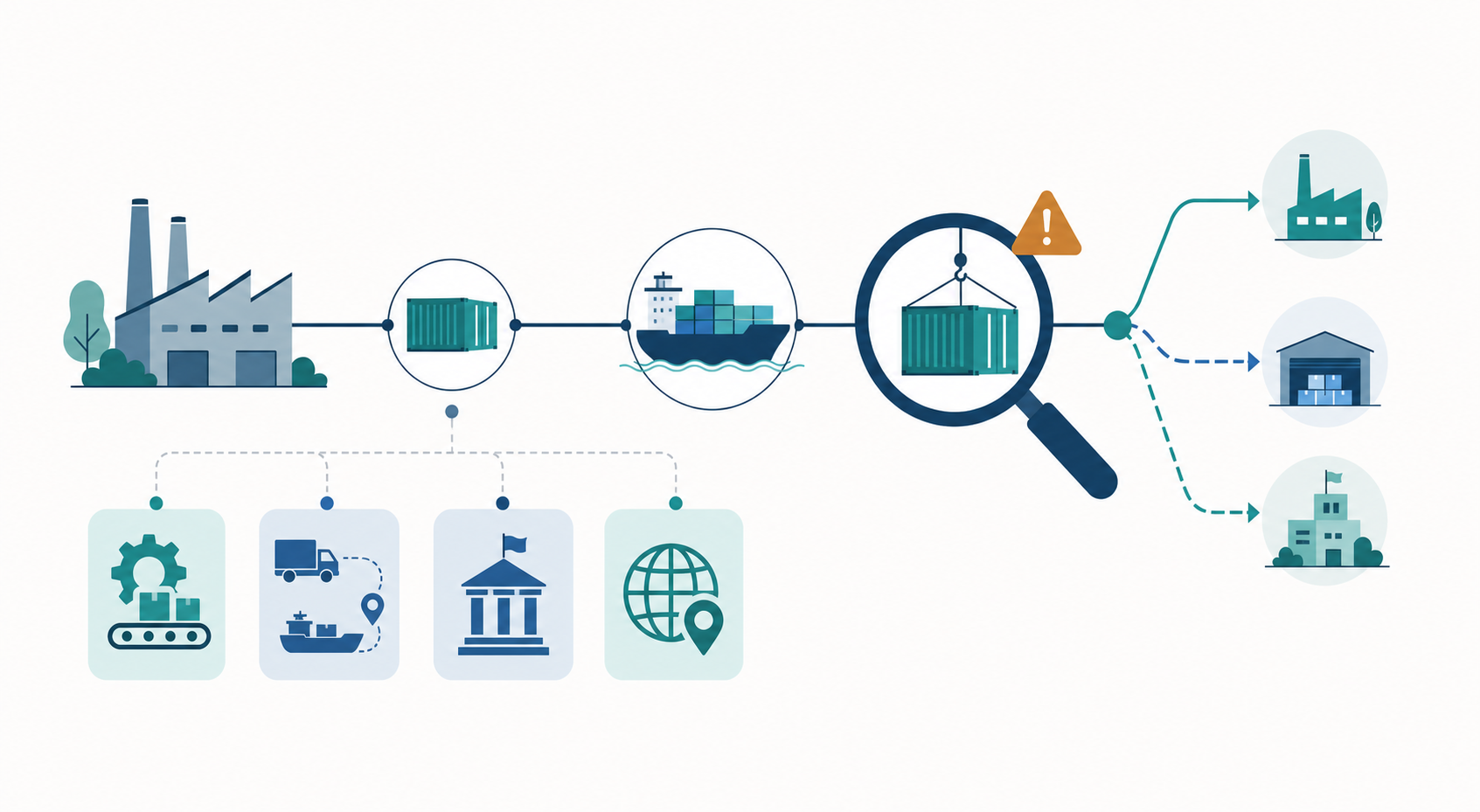
One public update rarely proves the full operational impact. A port strike notice may be confirmed, but you still need to know whether your freight uses that port, whether another route is available, and how long inventory can absorb a delay.
Define the boundary between public evidence and internal verification before you start.
| Check in public sources | Verify internally or with partners |
|---|---|
| what changed and when | direct exposure by item and purchase order |
| publisher and evidence URL | days of inventory and open-order coverage |
| affected region, material, or operator | viable alternate suppliers or routes |
| expected duration or next update | contract, quality, and cost implications |
Treat web monitoring as the step that finds a review target and hands it to an owner with evidence, not the step that closes the risk assessment.
Step 1: tie the watch scope to a supply decision
"Monitor global supply chains" is too broad to operate. Each job should support one decision.
| Watch scope | Typical signals | Decision supported |
|---|---|---|
| Critical input | export controls, outages, supply outlooks | safety stock or material substitution |
| Key supplier | plant disruption, quality issue, restructuring | allocation or alternate-source review |
| Logistics route | port disruption, sailing change, customs action | delivery planning or rerouting |
| Country or region | sanctions, regulation, disaster, infrastructure failure | geographic diversification |
Stratum Flow uses one Seed URL per job, so split the work into scopes such as "official notices for one critical material" or "service updates from one logistics operator." Use Seed URLs: Usage and Examples to choose a page where relevant updates accumulate.
Step 2: give every source a defined role
Classifying sources by role reduces the chance of treating commentary as confirmation.
| Source type | Examples | Use it to |
|---|---|---|
| Government or international body | trade rules, disaster notices, statistics | confirm scope and effective dates |
| Supplier or logistics operator | outage, restart, sailing, service notices | confirm first-party operational facts |
| Industry association | capacity, demand, sector constraints | place an event in sector context |
| Specialist publication | analysis and stakeholder comments | identify follow-up questions and sources |
The OECD Supply Chain Resilience Review 2025, checked on June 21, 2026, frames resilience around agility, adaptability, and alignment rather than isolation alone. Japan's Ministry of Economy, Trade and Industry also covers supply chain resilience and critical minerals in its 2025 White Paper on International Economy and Trade.
These reports do not tell you what will stop this week. Use them to define watch priorities, then verify individual changes through the latest first-party notice.
Step 3: classify each signal into four risk types
Every retained item should fit at least one of these categories. If it does not, it may not be actionable for the supply team.
| Category | Question | Examples |
|---|---|---|
| Capacity | could available production or operating time change? | plant shutdown, equipment failure, delayed expansion |
| Transport | could the route or transit time change? | canceled sailing, port closure, customs delay |
| Policy | could trading conditions or legal availability change? | export control, tariff, certification rule |
| Substitutability | can another source or material be used? | supplier exit, specification change, alternate approval |
If an update touches several categories, choose the first operational effect as the primary category. An export-control change starts as a policy signal; reduced availability is a downstream capacity hypothesis until confirmed.
Step 4: separate fact, impact hypothesis, and open questions
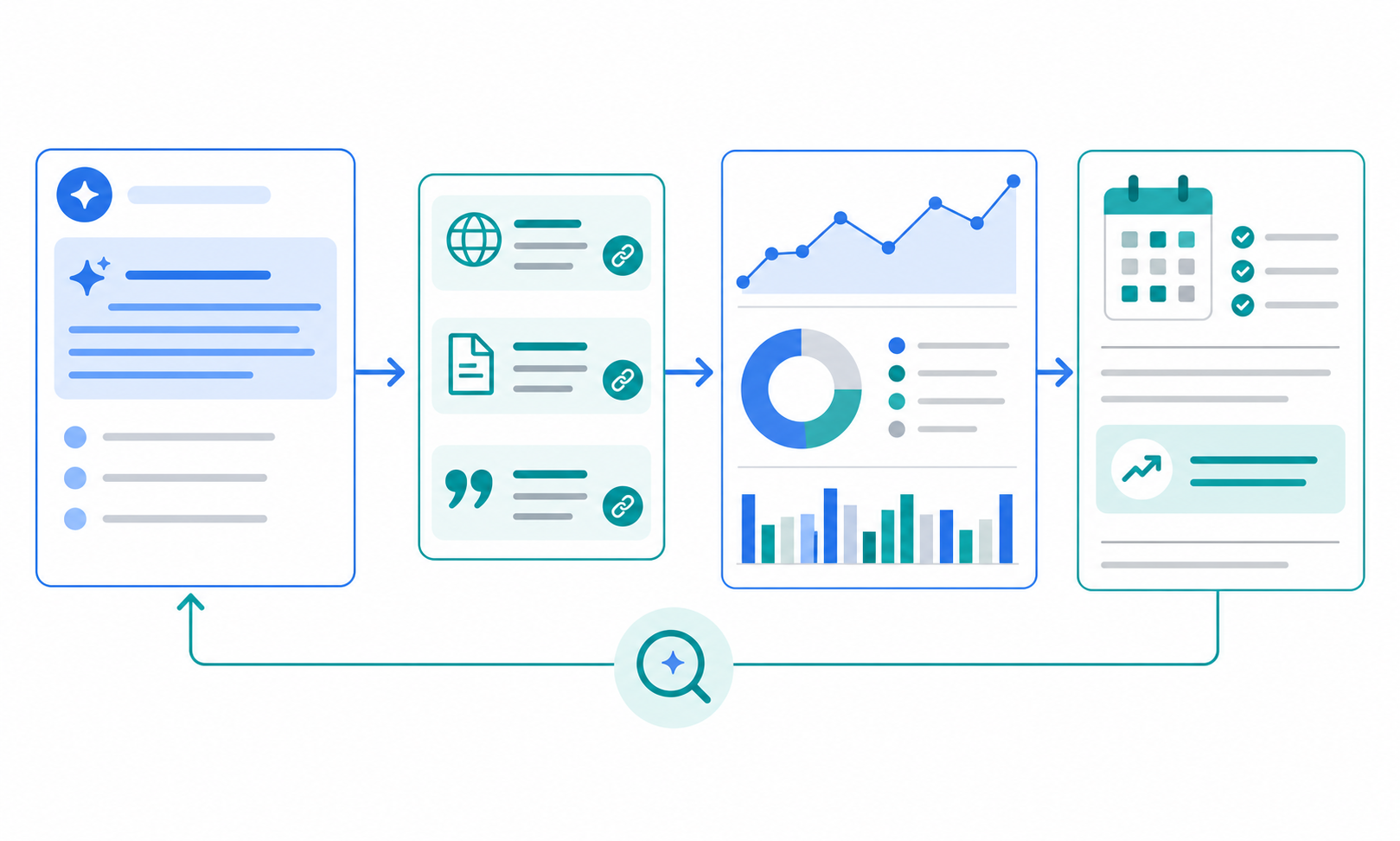
Mixing evidence and inference creates unnecessary escalation. Require the same output order every time:
- Confirmed fact: publisher, change, date, and scope
- Impact hypothesis: why the change may affect a specific item, supplier, or route
- Open questions: exemptions, recovery timing, and alternate-source availability
- Next check: owner, deadline, and party to contact
Use How to Write Effective Research Instructions to start with a prompt such as:
Keep only updates that may affect capacity, transport, policy, or substitutability. For each item, return Confirmed fact / Impact hypothesis / Open questions / Evidence URL / Next check. If impact cannot be determined, label it unknown.
Step 5: assign severity and review timing together
Severity alone does not tell an owner when to act. Pair likely supply impact with a review window.
| Route | Condition | Action |
|---|---|---|
| Immediate review | a core item may be affected and the start date or outage is near | check supplier, logistics, and inventory exposure today |
| Weekly review | impact is plausible but scope or timing is not confirmed | assign an owner and verification deadline in the weekly meeting |
| Ongoing watch | long-range policy, investment, or capacity change | record the delta and reassess monthly |
| Archive | no link to a relevant item, region, supplier, or route | preserve evidence without notifying the team |
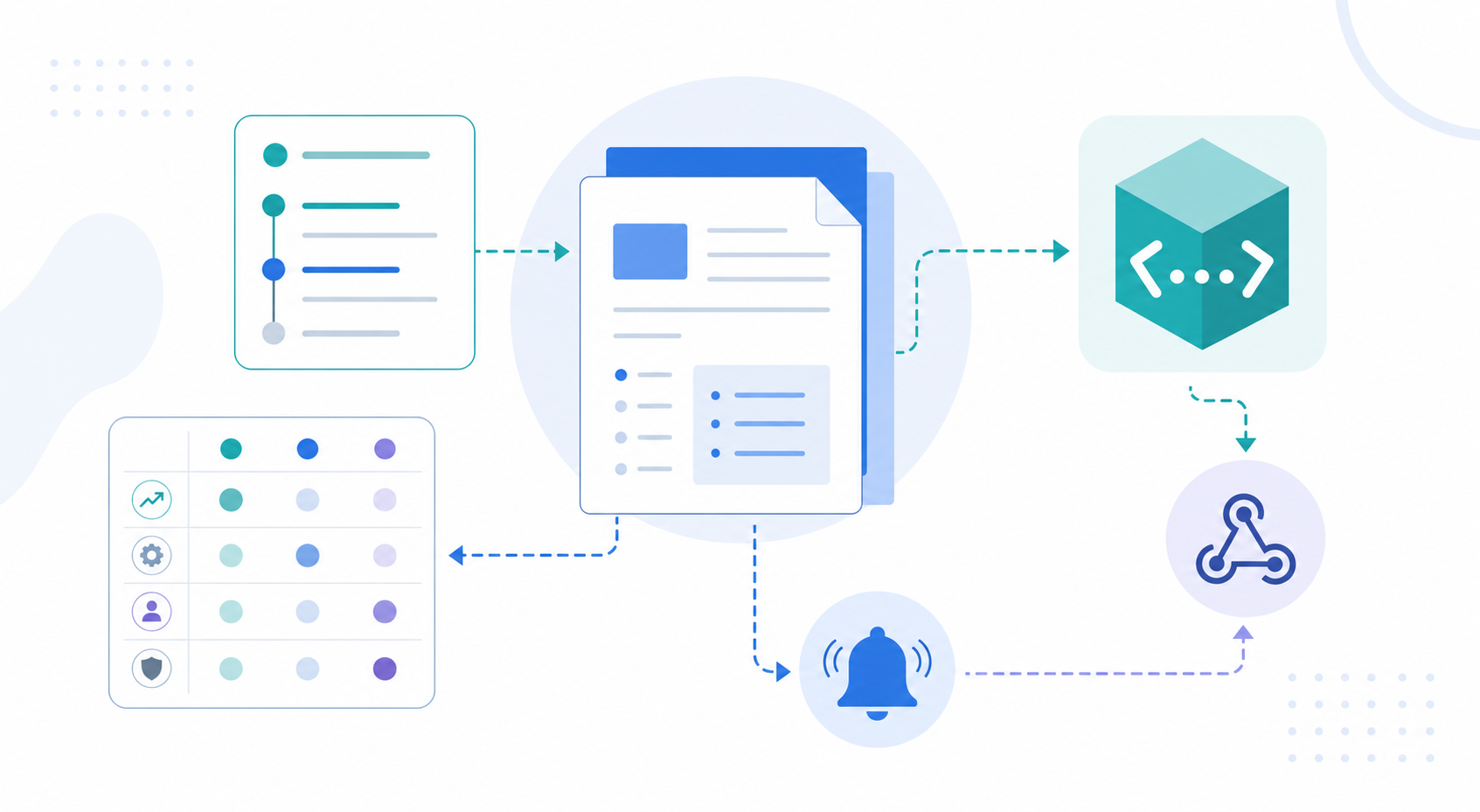
Notify only on immediate-review items to keep routine updates from exhausting the response team. If you need separate destinations, see How to Set Up Webhooks.
Common failure modes
1. Treating geopolitical news as operational exposure
A major event can still have no direct connection to your materials, routes, or suppliers. If the connection cannot be explained, keep the item in review or archive rather than escalating it.
2. Declaring a shutdown from secondary reporting
Return to the notice from the government, supplier, or logistics operator. If the event is not confirmed, write "possible disruption," not "supply has stopped."
3. Sending every change as an immediate alert
Policy consultations, demand outlooks, and capacity investments may matter without requiring action today. Separate alerts from weekly and monthly review.
4. Trying to finish the assessment with public data
Inventory, contracts, quality approvals, and alternate sourcing require internal and partner data. Public monitoring should trigger that work, not pretend to replace it.
When Stratum Flow fits well
- you want to check public agency and operator update pages with the same criteria
- every summary must retain evidence URLs and unresolved questions
- only high-impact changes should reach the response team
- a weekly report should show what changed and who needs to verify it next
Summary
Useful supply chain risk monitoring depends less on news volume than on a consistent record of supply impact, evidence, confidence, and response timing. Use public signals to start verification, then hand the decision to internal data and accountable owners.
Next step
Try Stratum Flow for free and start with one material or logistics route