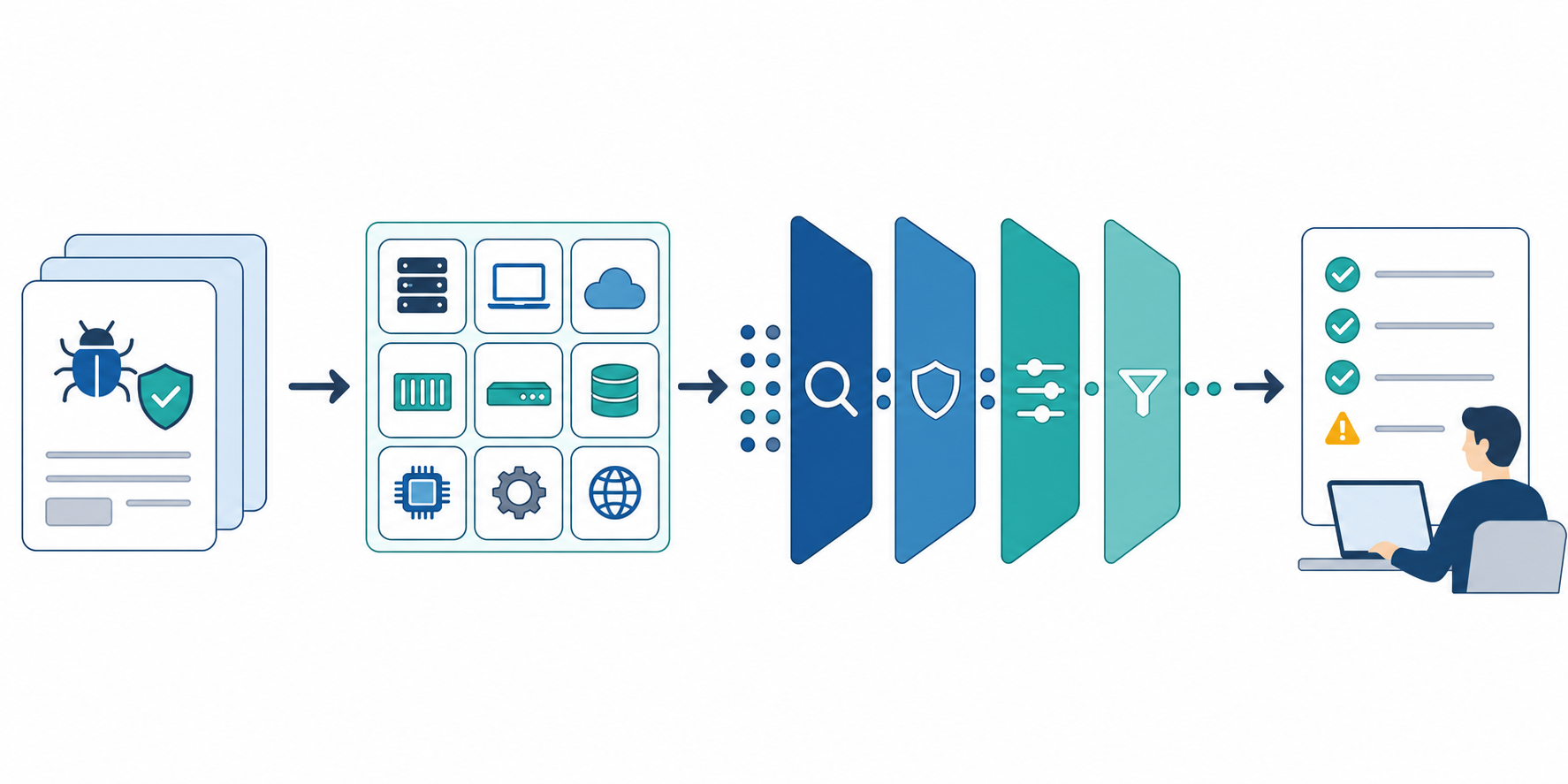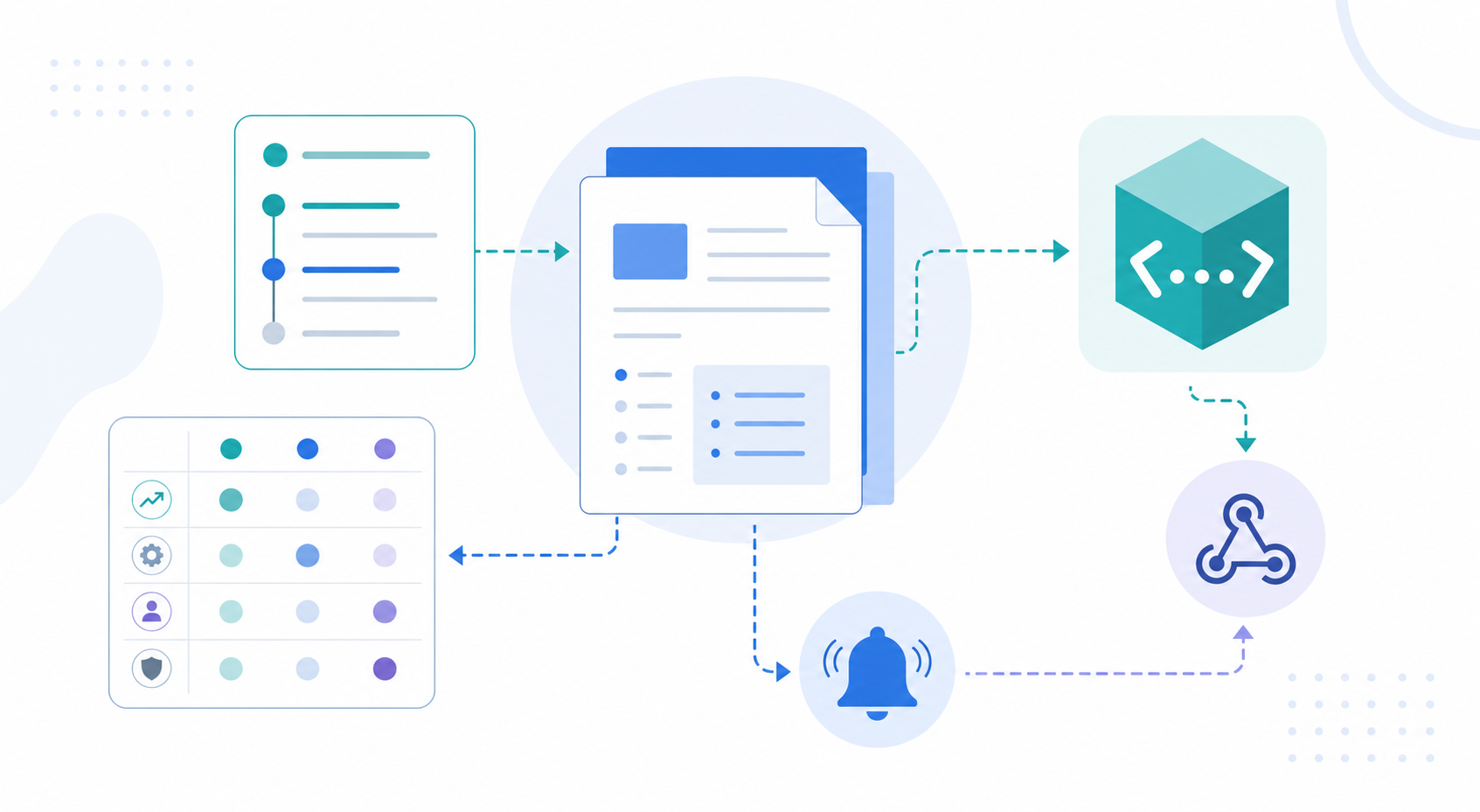
When Search Console shows strong impressions but weak CTR, it is tempting to rewrite titles and descriptions page by page. For a SaaS site, that can create a new problem: the homepage and contact page begin to promise the same thing. The homepage should help a visitor decide whether the product is relevant and what they can try first. The contact page should route human-assisted conversations such as procurement, security, contracts, and implementation questions.
This article takes a higher-level view than the dedicated guides on SaaS homepage CTR and contact-page CTR. It shows how to split high-impression, low-CTR pages into homepage, help, API, and contact roles, then turn the homepage and contact fixes into title, description, introduction, heading, internal-link, CTA, and eyecatch specifications.
The short answer: Fix the role conflict before rewriting individual pages
- Review Search Console URLs by page type: homepage, help, API, and contact
- Make the homepage answer what the product is and what a user can try after signup
- Make the contact page explain which conversations need a human response
- Use help pages for task answers and API pages for implementation order
- Write the fix brief in this order: title, description, intro, first heading, internal links, CTA
- After publishing, review CTR alongside signup, help navigation, and inquiry type
Google's Search Console Performance report lets you inspect pages, queries, impressions, and CTR. Google's official help describes using query and page-level search-result data to understand traffic and improve SEO efforts (Search Console Performance report). For SaaS sites, the next step is to separate the page roles before applying the same rewrite pattern everywhere.
Why homepage and contact fixes often conflict
Homepage and contact pages sit close to conversion, so teams often give them similar search-result language. That makes both pages less clear.
| Common conflict | What happens on the homepage | What happens on the contact page |
|---|---|---|
| Overemphasizing sales contact | Self-serve visitors may feel the product is too heavy to try | Inquiry scope gets too broad |
| Overemphasizing free signup | The first post-signup task is still unclear | Human-assisted conversations may be pushed to signup |
| Absorbing help content | The homepage becomes overloaded | The form receives questions help pages could answer |
| Mixing API and technical review | Non-developers see noise | Security, implementation, and sales questions blur together |
You can raise clicks by making the search result sound stronger. But if the clicked page has the wrong job, signup quality, inquiry quality, or help navigation will suffer. Define who each page should receive, and who each page should send elsewhere, before rewriting.
Step 1: Build a role table for each page type
Start with page-level data in Search Console, but do not rank URLs only by impressions and CTR. Add the page role first.
| Page type | Main job | What the search result should say first | On-page action | Where to route other intent |
|---|---|---|---|---|
| Homepage | Product category and use-case judgment | Who the SaaS is for and what it does | /register, use-case review |
Help, blog, contact |
| Help | Task answer | Which setup or workflow question it answers | Related help, setup, signup | Blog, register |
| API | Developer implementation | Auth, Jobs, Reports, Notifications | Implementation review, API key prep | Help, contact |
| Contact | Human-assisted conversation | Sales, billing, contract, and security support | Form submission, required information | Register, help |
The final column matters. Homepage visitors do not all need to go straight to signup. Some need dashboard basics or Seed URL setup. Contact-page visitors who only need usage guidance may be better served by research instruction examples.
Step 2: Prioritize homepage and contact fixes separately
If several high-impression pages have low CTR, do not automatically start with the URL that has the most impressions. Homepage and contact pages have different business outcomes.
| Decision point | Prioritize the homepage when | Prioritize the contact page when |
|---|---|---|
| Query shape | Brand, category, and problem queries are mixed | Sales, billing, or security intent is visible |
| Next action | /register navigation is weak |
Form completion or inquiry quality is weak |
| First screen | The SaaS category is unclear | The supported inquiry types are unclear |
| Internal links | Help and blog routing is thin | Self-serve escape routes are thin |
| Likely return | Signup and first-job activation may improve | Pre-sales confidence may improve |
For the homepage, ask whether the click can become a meaningful self-serve signup. For contact, ask whether the page is attracting the right human-assisted conversations. The same CTR movement means different things on each page.
Step 3: Write the homepage improvement brief
The homepage brief should connect the search-result promise to the first screen and signup path. The dedicated SaaS homepage CTR guide goes deeper on homepage-only fixes; this framework keeps the homepage separate from help, API, and contact responsibilities.
| Brief item | What to specify | Example |
|---|---|---|
| Title | Who the product is for and what kind of SaaS it is | AI competitor and market research monitoring SaaS |
| Description | Core use cases, output, and first post-signup task | Monitor competitor sites, pricing, releases, and industry news, then receive reports and alerts. Create your first recurring research job after signup. |
| Introduction | Repeat the search-result promise on the first screen | State that the product supports recurring competitor research, market research, and public-web monitoring |
| Headings | Separate decision points | Use cases, sources, reports, alerts, API integration, first signup flow |
| Internal links | Route questions the homepage should not fully answer | 5 ways to automate competitor research, dashboard basics |
| CTA | Keep /register as the main action |
Create your first recurring research job |
The homepage should not absorb the contact page's job. Show /contact for people who need a sales, procurement, or security conversation, but keep self-serve users focused on what they can do after registration.
Step 4: Write the contact-page improvement brief
For the contact page, "contact us" is too vague. Searchers want to know whether their specific question belongs there and what they can check before sending a form.
| Brief item | What to specify | Example |
|---|---|---|
| Title | Supported inquiry scope | Contact, sales inquiry, and security review |
| Description | Inquiry types, response expectation, and prep details | Use this page for sales questions, quotes, invoice requests, DPA/NDA requests, security questionnaires, and support routing. Review expected response timing and useful preparation details. |
| Introduction | Separate human-assisted conversations from self-serve checks | Route sales, procurement, contracts, and security to contact; route product usage checks to help and signup |
| Headings | Group by inquiry type | Sales, billing and procurement, security, contracts, pre-signup checks |
| Internal links | Send self-serve visitors away from the form | research instruction examples, Seed URL setup |
| CTA | Split form submission and free signup by intent | Submit the form when human help is needed; use /register to try the product first |
The detailed contact-page CTR guide covers this page in depth. At the diagnosis level, decide first that the contact page should not receive every uncertainty a prospect has. Some questions are better answered by help content or a free trial path.
Step 5: Use help and API pages as role boundaries
Help and API pages are not side notes. They keep the homepage and contact page focused.
| Page | Why the homepage should link to it | Why contact should link to it |
|---|---|---|
| Dashboard basics | Show what happens after signup | Reduce usage-only inquiries |
| Research instruction examples | Reduce first-job uncertainty | Help prospects prepare clearer questions |
| Seed URL setup | Explain source selection | Answer source-setup questions before a form |
| API reference | Route developers to implementation details | Let technical reviewers check scope first |
For help-to-signup routing, see internal links and CTA design for help pages. For API pages, see improving API reference CTR by implementation order. In this framework, those pages prevent homepage and contact content from becoming overloaded.
Step 6: Review CTR with the next action
After publishing, avoid judging the change by CTR alone. Each page type has a different next action.
| Page type | What to review beyond CTR | How to read it |
|---|---|---|
| Homepage | /register navigation, help navigation, first-job creation |
If CTR rises but activation is weak, the first screen or CTA may still be misaligned |
| Help | Related help, register, and blog navigation | If readers do not continue, link context may be weak |
| API | API-key path, endpoint navigation, contact visits | If implementation questions rise, review the explanation order |
| Contact | Form start, inquiry type, signup branch | If generic inquiries rise, the description may be too broad |
Use 7 to 14 day windows when possible so a small short-term movement does not drive the decision. For low-impression pages, pair CTR with query content and the downstream action.
Common pitfalls
1. Reusing the same CTA copy on homepage and contact
Homepage CTA copy should point to the first self-serve task. Contact CTA copy should clarify inquiry type and preparation. One CTA sentence rarely fits both.
2. Prioritizing only the highest-impression URL
The homepage often wins by volume, but the contact page can be closer to revenue. Prioritize homepage and contact pages by business action, not just impressions.
3. Treating help and API links as optional
If homepage and contact pages try to answer every concern, both pages become noisy. Help and API links let each page keep a clear role.
4. Stopping after title changes
Title and description changes do not fix a page if the introduction and first heading still tell a different story. Put the search result and first screen in the same brief.
When Stratum Flow fits well
- You want to monitor competitor titles, descriptions, and CTAs while improving your own pages
- You need weekly tracking for competitor homepages, pricing pages, release pages, help pages, and docs
- Marketing, sales, and product teams need the same update report
- You want Slack or Teams notifications when important competitor pages change
Search Console helps you review your own search performance. To watch competitors' page roles and CTAs over time, you need fixed sources and recurring monitoring. Stratum Flow can use Seed URLs as the starting point for that recurring research workflow.
Eyecatch image prompt
Use case: productivity-visual
Asset type: 16:9 blog eyecatch image
Primary request: Create a clean editorial business illustration about diagnosing low CTR by page role for a SaaS website.
Scene/backdrop: A modern analytics workspace with a Search Console-like dashboard, four page-role lanes, and a decision workflow.
Subject: The homepage and contact page lanes are visually emphasized, with help and API lanes shown as supporting routes. Use abstract UI panels, arrows, small charts, and role labels as symbolic blocks, but avoid readable text.
Style: Polished flat 3D editorial illustration, neutral light background, restrained accent colors, crisp shapes, professional SaaS marketing tone.
Constraints: No logos, no real brand names, no screenshots of actual products, no tiny readable UI text, no watermark.
Summary
When high-impression pages have low CTR, do not start by changing titles in isolation. Split homepage, help, API, and contact pages by role first. Homepage and contact pages are especially easy to blur because both sit near conversion.
The homepage is the self-serve decision point. The contact page is the human-assisted conversation path. Once that boundary is clear, Search Console data becomes easier to turn into a useful SEO brief.
Next step
Create one table for homepage, help, API, and contact pages with title, description, introduction, first heading, internal links, and CTA. If you also want to watch competitor page changes, use Stratum Flow to fix the sources and run recurring research.
Start monitoring competitor pages for free
Related articles
- Search Console KPI Design by Page Role
- SaaS Homepage Internal Links for Signup, Help, and Contact
- Improve high-ranking, low-CTR pages with Search Console
- Improve SaaS homepage CTR with Search Console
- Improve contact-page CTR with Search Console
- Make a SaaS Security page useful for procurement review
- Improve API reference CTR by implementation order
- Internal links and CTA design for help pages